
El Paso Lawn and Landscape provides tree trimming and tree care in El Paso and El Paso County: shaping, deadwood removal, clearance cuts over walks and rooflines, and full cleanup and haul-off. Pruning is priced after we see the tree. Call (915) 465-9148 or request a free quote, and we will book the walkthrough.
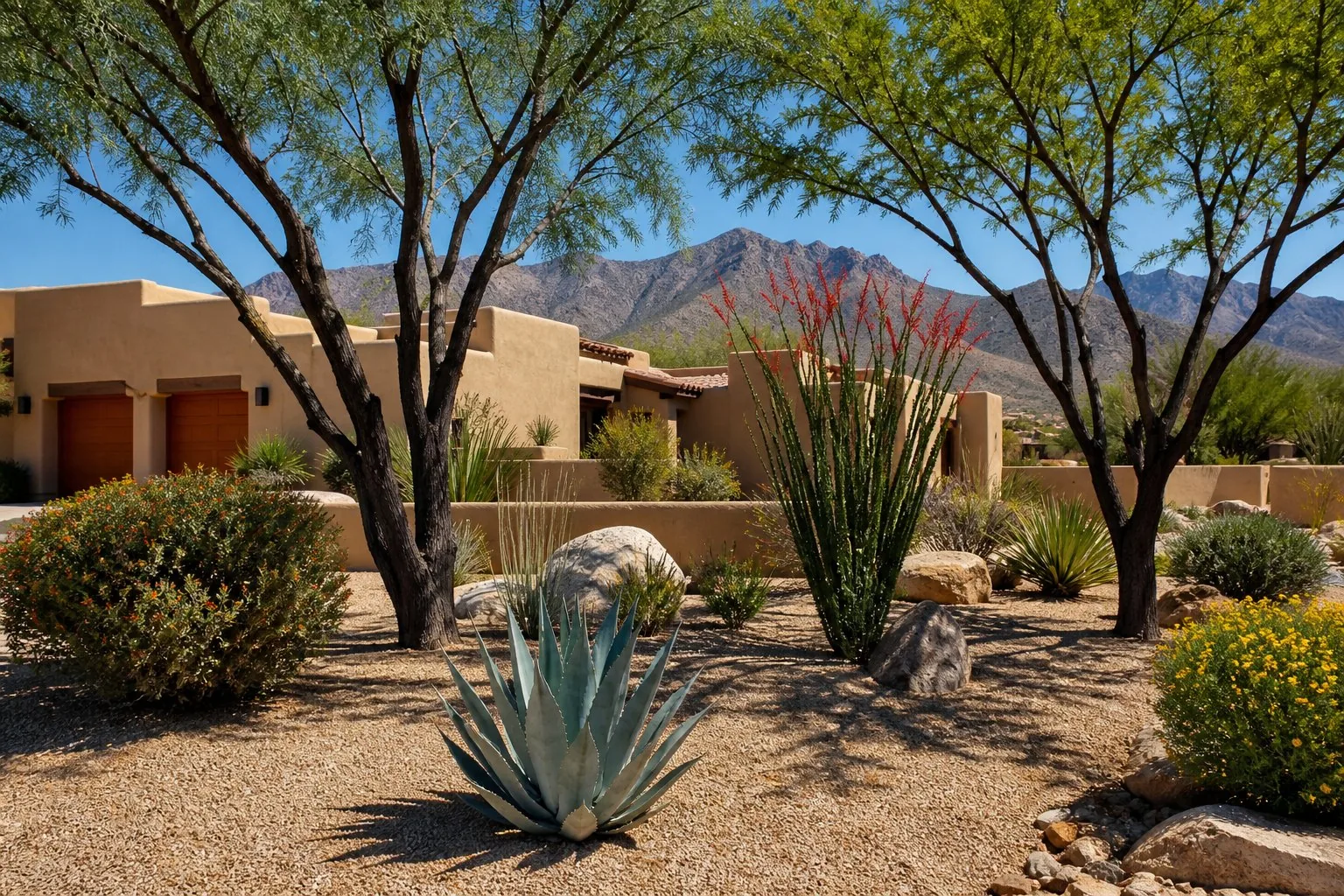
The first thing worth saying is where our scope stops. We work on trees and shrubs that can be safely reached from the ground or a ladder. A tree that is touching or near a power line, a large removal or a job that needs a bucket or a crane is a different kind of job, and later on this page we explain how we handle it so nobody ends up on a ladder next to a wire.
Who provides tree service in El Paso, and what does it cover?
We handle pruning and shaping of trees and large shrubs, removal of dead and damaged wood, clearance cuts over sidewalks, driveways and roofs, and the cleanup that goes with it. Branches are bagged, bundled and hauled away. Work above ladder height, near power lines or involving removal is scoped and referred honestly.
Most of the calls we get are not dramatic. A tree has put out a branch across a walk. A shrub has grown over a window. A tree has been left alone for a few years and now looks lopsided and heavy. A back-yard tree has a limb the owner is not comfortable climbing under. These are ordinary maintenance problems, and they are best handled early, while the branches are still small enough to cut cleanly and the cuts are small enough to heal.
For the yard around the tree, our yard cleanup and leaf removal page covers the debris side, and our commercial landscaping page covers tree care on business grounds.
What is the difference between trimming, pruning and topping?
Trimming and pruning are the same family of work: removing selected branches to improve health, structure or clearance. Topping is different. It means cutting the main leader and halving the crown, and the National Association of State Foresters puts it bluntly: topping trees kills trees. Topped trees become more hazardous over time, and the owner stays liable.
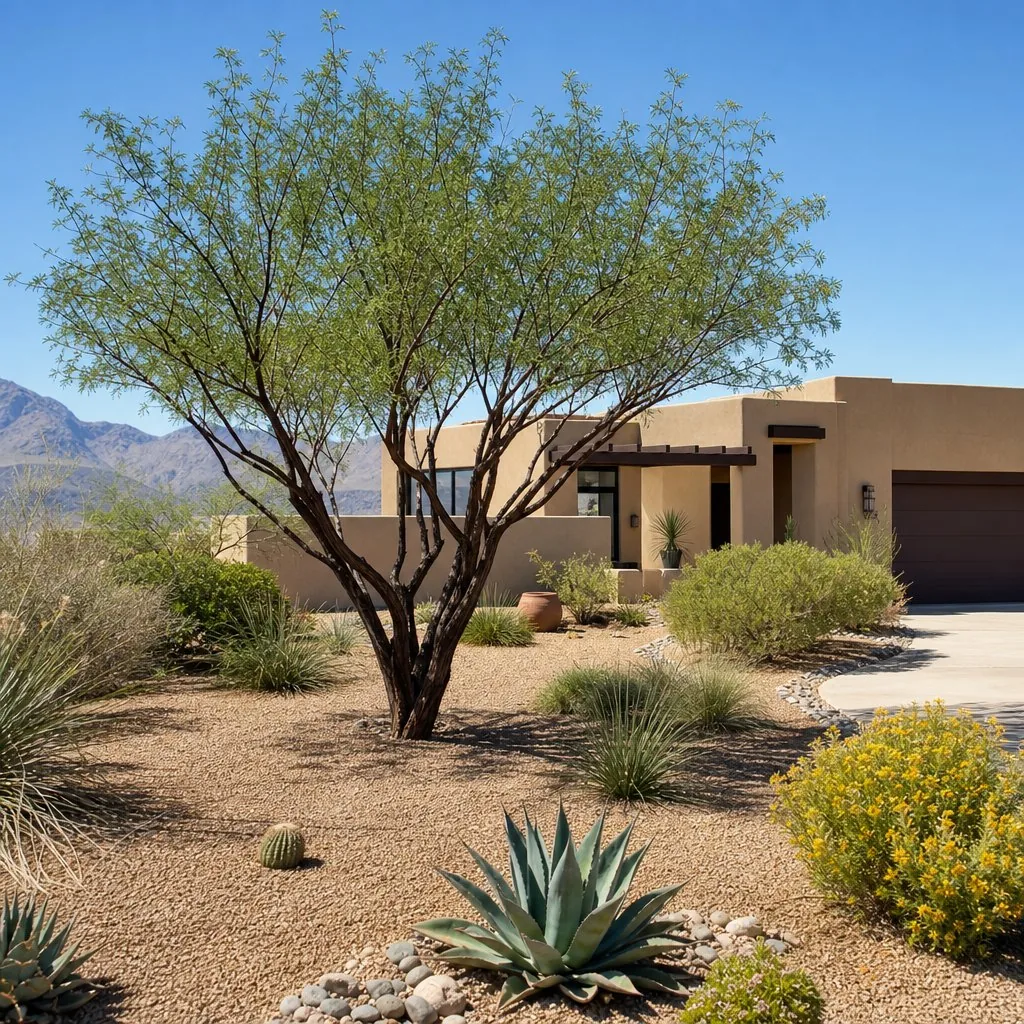

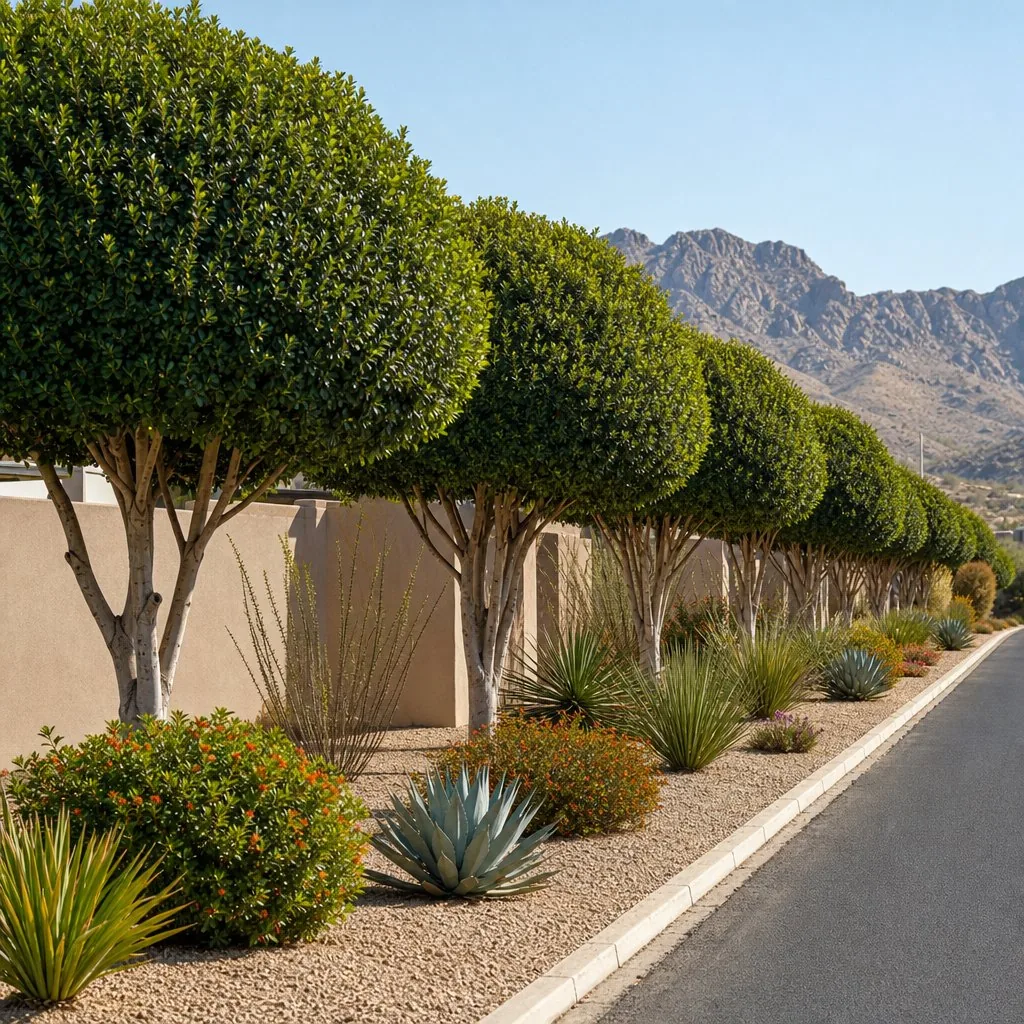
People ask for a topping because a tree is blocking a view, shading something or getting near a wire. The reasoning is understandable and the result is rarely what they hoped for. According to the National Association of State Foresters, once a tree’s leader is cut and its crown halved, the tree struggles to feed itself and to protect itself from insects and disease. The new growth that follows is weakly attached, and you end up with a bigger problem in a few years than the one you started with.
If what you want is less shade, a lighter canopy or more clearance, there is a proper way to get it: selective thinning and reduction cuts made back to a branch that is large enough to take over. It takes more skill and more time than a flat cut, which is the honest reason some people offer topping. We will not do it.
How much can be cut off a tree at one time?
A good rule of thumb from the National Association of State Foresters is to never remove more than 25 percent of a tree’s crown in one go. On a mature tree, the main objective is to remove damaged and dead wood, and cuts are made just outside the branch collar, never flush to the trunk.
The crown is where the tree makes its food. Take too much of it and the tree is stunted, and the stress shows up in the following seasons. That is why we decline jobs that ask for more than a quarter of the crown at once. If a tree needs to come down in size by more than that, it is spread over more than one season so it can recover between cuts.
The flush cut is the other common mistake. The branch collar is the slight swelling at the base of a branch where it joins the trunk. The foresters’ guidance is to cut the branch and not the collar, because flush cuts often lead to decay and thick, unsightly scars. A clean cut just outside the collar closes over, and a flush cut stays open.
What if the tree is near a power line?
Do not trim it yourself, and do not hire anyone to trim it who is not set up for line work. El Paso Electric says not to trim trees tangled in or near power lines, and to use a licensed and bonded arborist near them. Within 10 feet of the lines, EPE will help the arborist trim the tree safely.
This is the line we hold. We do not prune trees that are touching, tangled in or close to power lines. El Paso Electric’s page also lists when to call the utility directly: sparking or arcing in tree branches, broken branches entangled or hanging from power lines, or clearing trees near power lines. The Texas number on their page is (915) 877-3400. A field representative is scheduled to inspect.
The 10-foot rule is a legal distance, not a suggestion. Federal and state laws require workers and equipment to keep at least 10 feet from power lines up to 50,000 volts, and farther for higher voltages. Wires can also be concealed in the branches you want to prune, so the area needs to be inspected before any cut. If your tree is anywhere near a service drop, call the utility first.
What do El Paso’s rules say about branches over sidewalks and parkways?
The city’s code enforcement page says branches, foliage, hedges and shrubs must be trimmed so there is at least eight feet of clearance between the overhang and the sidewalk. It also says that maintaining vegetation in parkways and alleys is the property owner’s responsibility, and that grass, weeds and plants must not be allowed to become overgrown.
For a homeowner the practical meaning is simple. The branch that hangs over the walk, the shrub that has grown into the alley and the strip of weeds between the curb and the sidewalk are all yours. A branch that sweeps the head of anyone walking by is a code issue as well as a nuisance. We include a clearance check on the walk side as part of every walkthrough, and we measure it, so the cut is made to the clearance and not to a guess.
How much does tree trimming cost in El Paso?
Tree work is priced by the tree and the job, not by a rate card. The size of the tree, the amount of wood to come out, how far a truck can get and how much hauling there is all move the number. We give a written price after a walkthrough and do not quote over the phone.
The items that actually change a tree quote, in rough order of impact:
- Height and spread. A tree that can be worked from a ladder is a different job than one that needs a climber, and we only take the first kind.
- Amount of wood. Light deadwooding is quick, while a reduction on a big crown is a day of cuts, chipping and hauling.
- Access. A back-yard tree behind a narrow gate means every branch is carried out by hand, which is labor you pay for.
- Hazards on site. Fences, roofs, pools and walls change how limbs are lowered.
- Haul-off. The city’s special pickup takes brush and branches from residents for $35 up to five cubic yards, with $7 for each added yard and tax, and it does not take commercial or industrial generated material.
- Number of trees. More trees on one visit means more cuts and more hauling, and we price each tree as its own line so you can approve them one at a time.
If you are comparing bids, ask for the same cuts to be priced. A quote that tops the tree is not the same job as one that thins it.
What does our tree trimming process look like, step by step?
We look at the tree with you, decide what should come out and why, write that down with a price, and then do the cuts and clear the debris on an agreed day. You approve the scope before any cut is made, and you can mark any branch you want left. The process is built to avoid surprises.
- Request and walkthrough. You call or send the form with photos. We visit, look at the tree from several sides, check for wires, fences, roofs and walks, and note dead wood and clearance problems. You decide what you want out of the work: clearance, shape, light or safety.
- Scope and price. We write the cuts as a list: which limbs, how many, to what point. We note anything we will not do and why. You decide which items to approve.
- Setup (the same day as the work). The crew sets drop zones, protects hardscape and plants beneath, and confirms there is no line contact. You decide where debris can be staged.
- Cuts (about half a day for most single trees). Dead and damaged wood first, then clearance, then shaping. Cuts are made just outside the branch collar. No more than a quarter of the crown is removed in one visit.
- Cleanup and haul-off (same day). Branches are bundled or chipped, hauled away, and the ground is raked and blown.
- Follow-up (optional, in a few weeks). A short visit to check how the tree is closing its cuts and to pick up anything that dropped later.
What does a typical tree job look like?
These typical scopes illustrate how we build a quote and are not records of finished work. None of them carries a price because the numbers come from the walkthrough, and each one stays inside what a ground crew can safely do.
A typical front-yard shade tree over a walk: a mature tree with several limbs hanging across the sidewalk and one dead branch on the street side. The scope is clearance cuts to eight feet over the walk, removal of the dead branch, light thinning for balance, and cleanup. Nothing near a service line, and no more than a quarter of the crown.
A typical overgrown shrub row along a fence: large shrubs that have outgrown their space and push on the fence and the neighbor’s side. The scope is a reduction back to a sensible size, with cuts made to side branches, plus cleanup and haul-off. The owner decides whether any shrub should come out and be replaced instead.
A typical commercial courtyard with several small trees: a handful of small trees shading seating, with low branches at head height and leaf litter on pavers. The scope is a lift to a clear walking height, deadwood removal and a debris sweep. We schedule the work outside of opening hours when possible.
What happens to the branches afterward?
We haul them away. If you handle your own haul-off, the City of El Paso special pickup takes brush, tree trunks, branches and green waste from residents. You request it at (915) 212-6000 on weekdays from 7 a.m. to 2 p.m., and set it at the curb by 6 a.m. on the day, five feet from containers and meters.
The special pickup has rules that matter for tree work. It does not take dirt, rocks or concrete, and it does not take commercial or industrial generated material, so a business owner or a property with a contractor should plan on the contractor hauling. Material also must not obstruct sidewalks or traffic. Residents can bring green waste to the Greater El Paso Landfill or a city Citizen Collection Station as well, within those facilities’ own rules.
Do you spray trees for pests or disease?
No, spraying is outside the scope of this page. Texas requires anyone who applies any pesticide to ornamental plants, trees, lawns or weeds for hire to be licensed by the Texas Department of Agriculture. Only applicators who apply fertilizer alone are exempt. If a tree needs treatment, ask the applicator for their license category before they start.
The Department of Agriculture’s page lists the Landscape Maintenance category under its agricultural pesticide license and the Lawn and Ornamental category under the Structural Pest Control Service license. A tree in decline, with thinning leaves, dead tips or unusual damage, is a diagnosis question before it is a pruning question, and we will tell you when the right call is a certified arborist or an extension agent and not a pair of loppers.
How should I water a tree so it stays healthy?
El Paso Water says the ordinance allows three watering days a week but that it is often better to water less frequently, and it publishes watering depths for mature plants to encourage root growth. From April through September watering is only allowed before 10 a.m. or after 6 p.m. Drip irrigation puts the water at the root zone.
That matches what trees need. A tree on a lawn sprinkler gets frequent shallow water that keeps roots near the surface, where they dry out first and give the tree little reserve. Slower, deeper watering, delivered at the drip line and not against the trunk, trains roots to go down. Our drip irrigation page covers how that is set up, and our watering rules page covers the schedule so you do not trade a healthy tree for a citation.
How do I know whether I need trimming or a different specialist?
If the problem is size, shape, clearance or dead wood, it is a trimming job. If the tree is leaning, cracked at the base, hollow, or declining in the leaves for no clear reason, that is a diagnosis question. We say so at the walkthrough and point you to a certified arborist before anything is cut.
The distinction matters because pruning cannot fix everything. Cutting a limb off a tree that is failing at the trunk only makes the tree lighter on one side. Likewise, a tree that is dropping leaves because the irrigation is wrong will not recover from a haircut, it will recover from a watering fix. A good walkthrough looks at what is under the tree as well as what is in it: the sprinkler heads, the soil, the way water runs. When we see the cause is outside the canopy, we note it in writing so you can act on it.
What should I ask any tree company before they start?
Ask for the cuts in writing: which limbs, how many, how much of the crown comes out and where the cuts land. Ask whether the job involves any wire or any height beyond a ladder, who hauls the debris, and whether any spraying is included. A company that says “just topping” or “whatever you want” has told you something.
Here is the short list we would use if we were the customer:
- Do you top trees? The answer should be no.
- How much of the crown will come out, as a percentage?
- Will the cuts be made just outside the branch collar?
- Is there any line within 10 feet of the work, and who handles that?
- Who removes the debris, and is it included in the number?
- What is excluded, such as stump grinding, spraying or replanting?
Our guide to choosing a landscaper has a longer set of questions that apply to any outdoor contractor, not just tree crews.
Where do you do tree work?
We work across El Paso and the valley, including West El Paso, East El Paso, Northeast El Paso, the Upper Valley and the Lower Valley, plus Horizon City, Socorro, San Elizario, Canutillo and Fabens. The full list is on our areas page.
Tell us the neighborhood and whether the tree is in the front, back or along an alley when you request the quote. Access changes the job more than people expect. A tree at the end of a long side gate takes longer than one at the curb, and a tree in an alley may involve the utility lines that run there.
How do I get a tree trimming quote?
Call (915) 465-9148 or send the free quote form with a photo or two, the neighborhood and what is bothering you. Include a shot that shows the lines overhead if there are any, so we can tell you at once whether the job is one we take.
A photo from the street and one from beneath the canopy answer most of the early questions. Tell us whether the branch hangs over a sidewalk, a neighbor’s yard or a roof, and whether you have had a notice from the city. We will build the scope from there and book the walkthrough.
Get a Free Quote
Tell us which El Paso yard condition or outdoor use needs attention.
Describe the El Paso Desert Site
Provide the sun exposure, irrigation layout, access, and target use so the Chihuahuan Desert project can be defined before pricing.
Get a Free QuoteFrequently Asked Questions
When should trees be trimmed in El Paso?
Structural pruning is generally scheduled during dormancy in late winter, before spring growth begins. In Chihuahuan Desert conditions that timing also avoids adding stress during the hottest and driest part of the year. Species and condition differ, so specific timing is confirmed at the site assessment rather than applied as a blanket rule across every property.
Is debris removed after trimming?
Yes. Branches and green waste are removed as part of the scope and disposed of in line with local requirements. What is included, covering removal, haul-off and cleanup, is named in the written estimate before work begins, so the boundary is explicit rather than assumed after the fact.
How often do El Paso trees need trimming?
Frequency depends on species, age, growth rate and clearance requirements, so it is set per property rather than on a fixed cycle. The practical triggers are clearance over walkways and drives, dead or crossing limbs, and structure that will not hold up under wind. Those conditions are assessed on site and recorded in the written estimate.