
In El Paso, a drip irrigation system is designed and installed by a TCEQ-licensed irrigator, not by a general landscaper. Our part is planning: we help you scope the beds, zones and water budget so every quote covers the same job. Call (915) 465-9148 or request a free quote to start the scope.
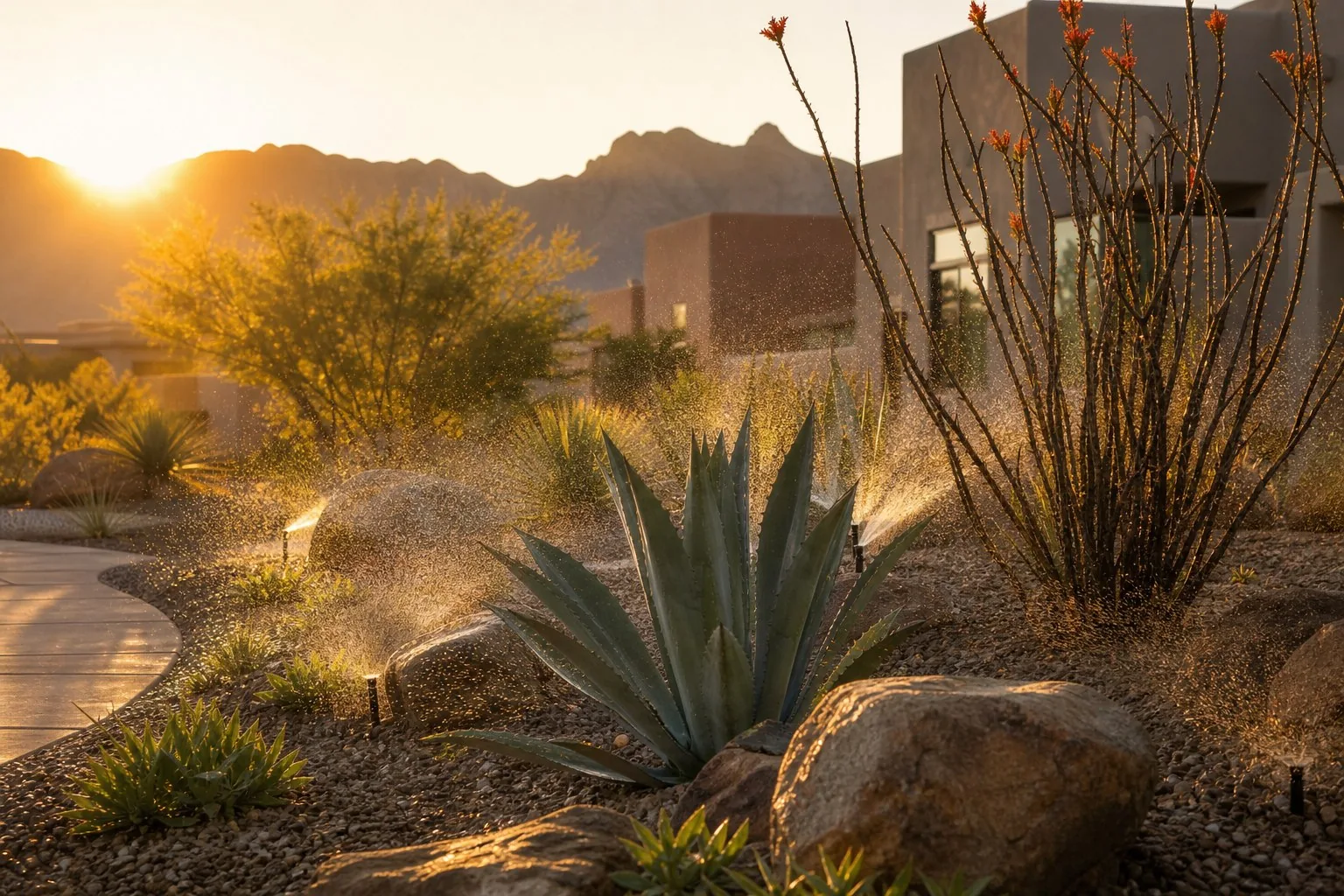
This page is a planning guide for El Paso homeowners. It explains who the state allows to design and install a drip system, what the written plan has to show, how the finished job is handed over, and what El Paso Water expects of you afterward. Every rule below comes from a TCEQ, Texas Administrative Code or El Paso Water page we read before writing it.
Who is allowed to design and install a drip irrigation system in El Paso?
Texas law reserves landscape irrigation design and installation for irrigators licensed by the Texas Commission on Environmental Quality. A licensed irrigation technician can install under an irrigator’s supervision. Drip counts: the state’s rules name drip emitters as emission devices, the same as spray heads and rotors, so a drip job falls under the same chapter.
The rule that does the sorting is 30 TAC Chapter 344. It defines an irrigator as someone who performs irrigation services, including connecting the system to a water supply, and who holds a valid irrigator license. An irrigation technician connects or works on systems under a licensed irrigator’s supervision and holds a technician license of their own.
That is why this page is a hiring guide and not an install menu. If a company tells you it will design and build your drip system, ask which licensed irrigator is responsible for the plan, and check the answer yourself using the steps further down.
How do I check that an irrigator’s TCEQ license is real?
TCEQ runs a public search for licensed and registered landscape irrigators and companies on its Landscape Irrigation page. Get the irrigator’s name and license number from the quote, search both, and confirm the license is current. Do it before you sign anything, not after the trenching starts.
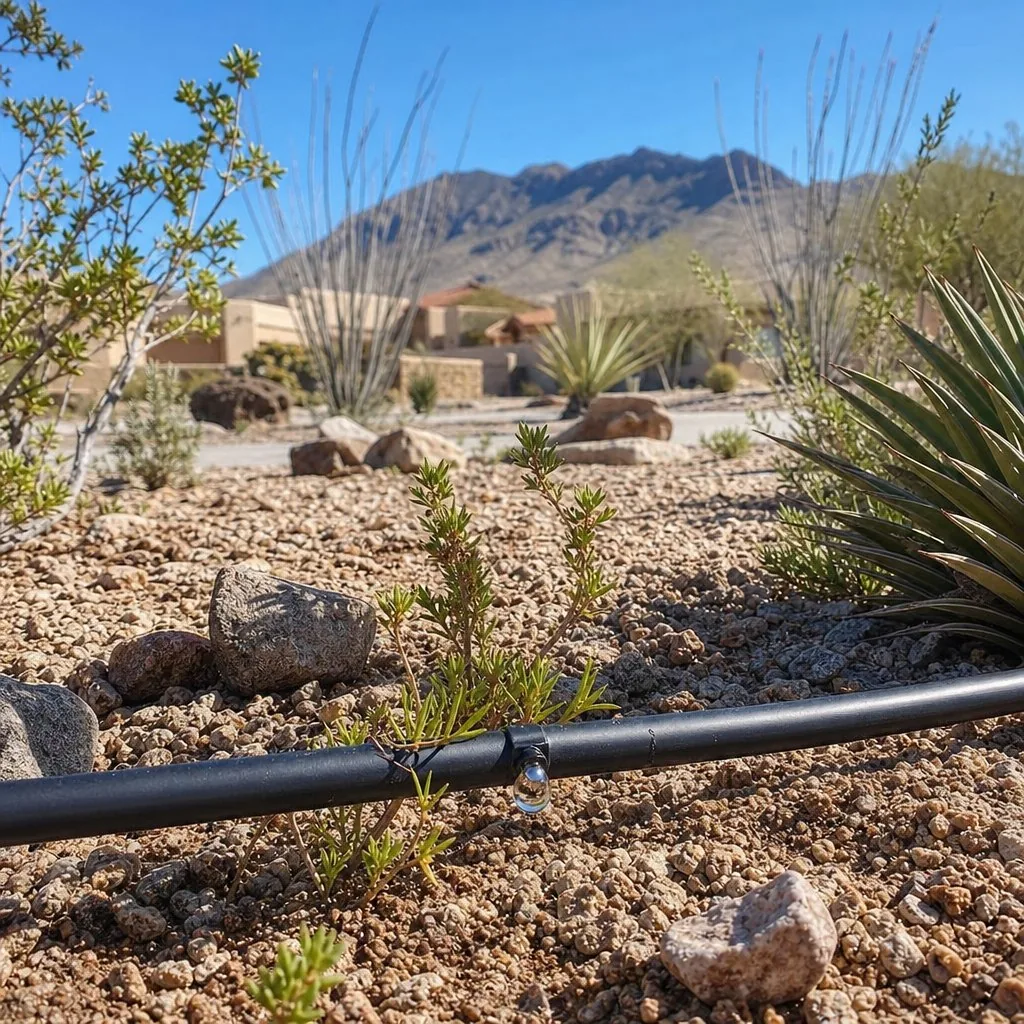
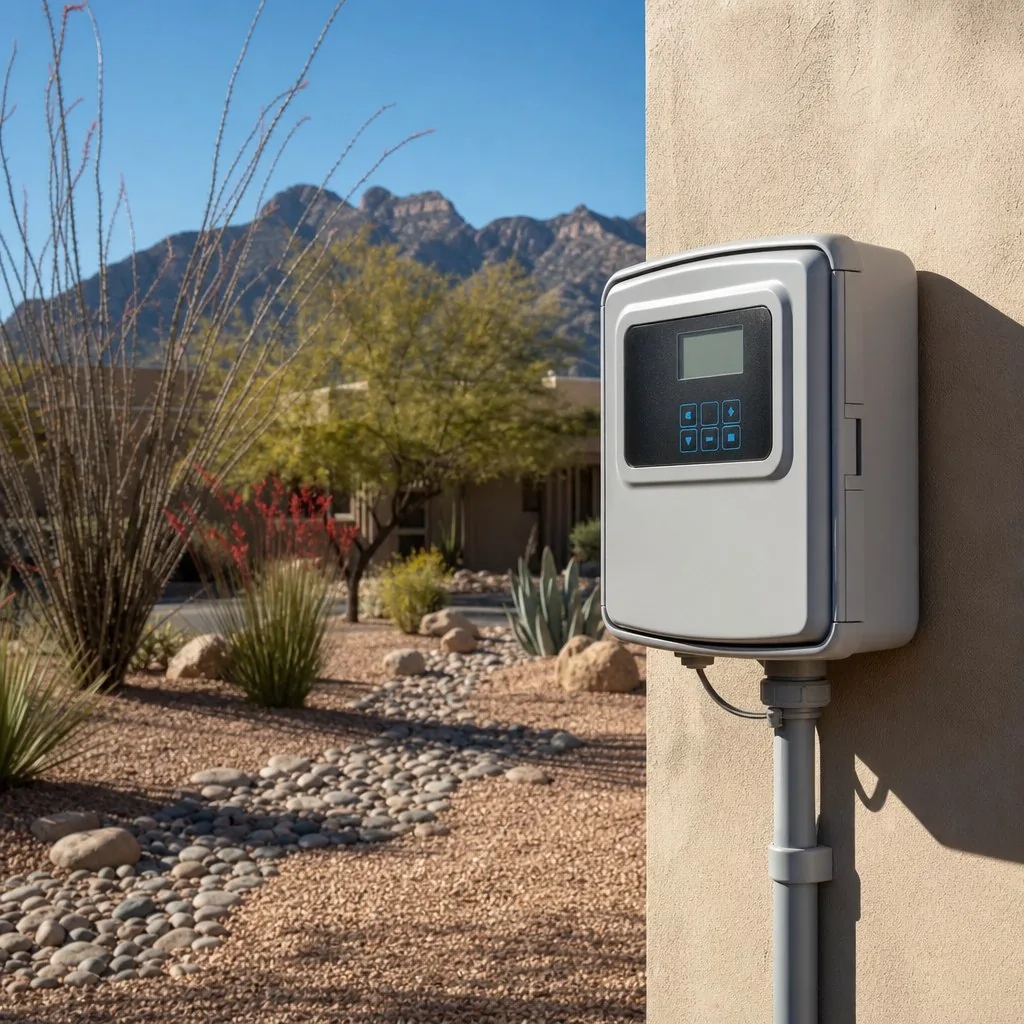
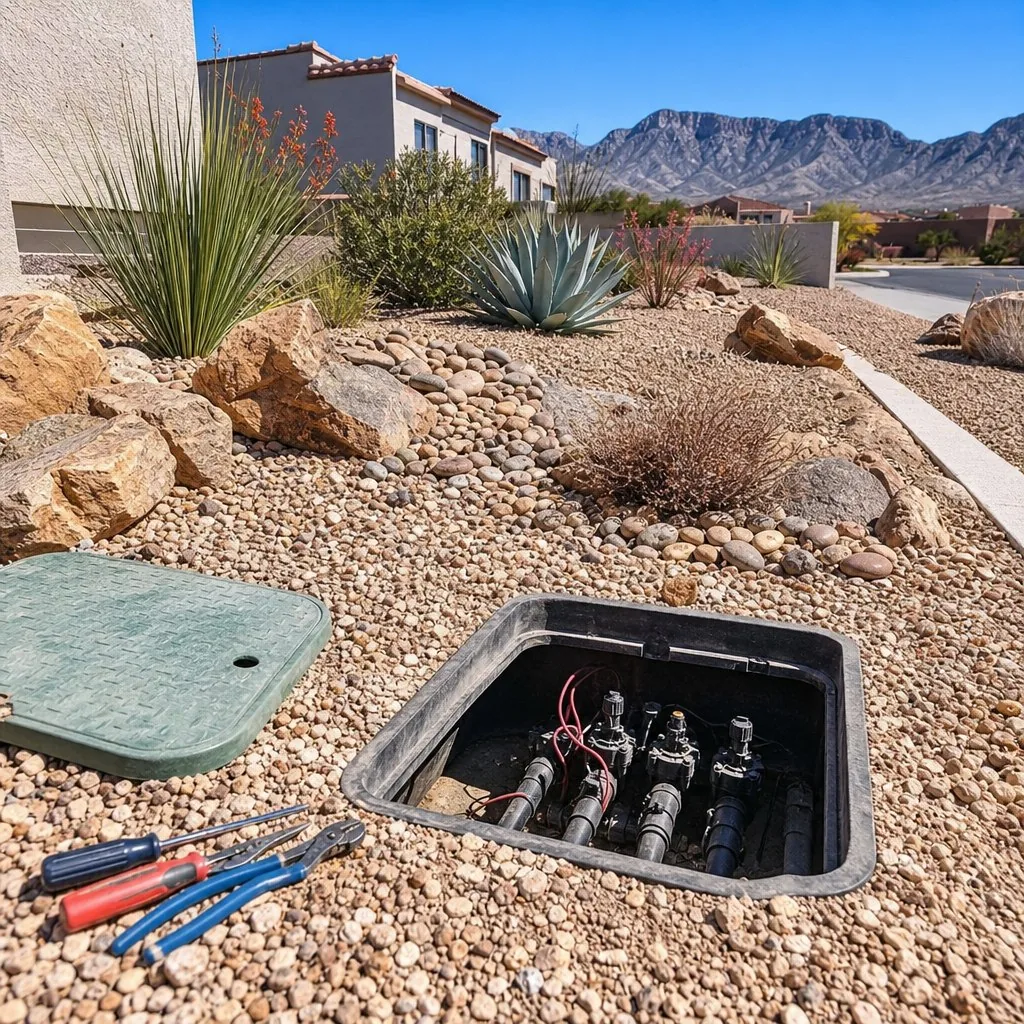
The same TCEQ page describes the seal requirement. Each irrigator obtains a seal when licensed, and a licensed irrigator may not do landscape irrigation work without the seal and the license in physical possession. So the plan you receive should carry a seal, and the person on site should be able to show you the license.
Texas also made unlicensed irrigation work something a municipal or justice court can hear. TCEQ’s page says complaints against an unlicensed irrigator can be filed in those courts, and officers can issue a ticket citing Texas Occupations Code Section 1903.256. You do not need to threaten anyone with that. It is simply a good reason to verify first.
- Ask for the irrigator’s full name, license number and company name in writing.
- Search both on TCEQ’s licensing lookup and confirm the status.
- Ask who will be on site each day: the irrigator or a licensed technician.
- Ask to see the license and seal on the day the plan is delivered.
What does the written irrigation plan have to include?
The irrigator must prepare a site-specific plan for each new system, drawn to scale, showing complete coverage of the areas to be watered. It carries the irrigator’s seal, signature and date, a north arrow, a legend, zone flow figures, controller and sensor locations, and component specifications. It stays on the job site during installation.
Here is what Chapter 344 lists for the plan, in plain terms. The plan shows property lines, streets, sidewalks, buildings, fences, bed lines and the boundaries of the areas to be watered. It names the type, size, manufacturer, model, operating pressure and flow range of each component. It states the design pressure. Areas that will not be irrigated are marked clearly.
As a homeowner you do not have to read hydraulics. You do have to hold the irrigator to the document. A quote that says “drip system for the front yard” with no plan behind it is not the paperwork the state describes. TCEQ also publishes a sample irrigation plan and a plan checklist that cities and irrigators use, and you can ask the contractor whether their plan would pass it.
If something changes during the build, the rule is specific. The licensed irrigator may authorize a change if it is documented in red ink on the plan and does not hurt how the system works or break the chapter. At the end, every change is captured in an as-built drawing.
What does our drip irrigation planning process look like, step by step?
Our process runs from a walk of the property to a written scope you can hand to any irrigator, then through quotes, permits, the build and the handover. We cover the planning stages. The licensed irrigator you hire covers design, installation and the state paperwork.
- Site walk and goals. We walk the property with you and list every bed, tree and pot you want watered, what is already on a controller, and where water is running off or pooling. You decide what is in and what is out.
- Written scope. We turn the walk into a plain document: areas, plant types, which zones need to be separate, and what you want the system to do. You decide the priorities. The scope is what each irrigator quotes against, so the quotes can be compared line for line.
- Rebate check. Before anything is bought, we check which El Paso Water rebates apply, because the application window is 60 days from purchase. You decide whether to add a smart controller or a rainwater system to the scope.
- Irrigator quotes. You ask two or three TCEQ-licensed irrigators to bid on the scope. You verify each license on the TCEQ lookup, and you choose.
- Plan and permits. The chosen irrigator prepares the sealed plan and pulls whatever local permit and inspection El Paso requires. You review the plan against your scope and approve it before work starts.
- Installation. The irrigator or a licensed technician is on site while the work is done. You decide on any field changes, and the irrigator documents them on the plan. Your irrigator sets the schedule and tells you how long each stage will take.
- Inspection and handover. The system is tested, the backflow assembly is inspected and tested, and the irrigator gives you the completion package described below. You sign the maintenance checklist only when you have seen the system run.
- First-season review. After the first hot stretch, walk each zone while it runs, note which areas are over or under watered, and take the list back to the irrigator or adjust your controller schedule.
How is drip different from a spray system under Texas rules?
Under Chapter 344, drip emitters and spray heads are both emission devices and both sit under the same design, installation and completion rules. The practical difference is the layout: drip puts water at each plant and avoids spraying hardscape, while spray heads must be spaced head to head and kept off impervious surfaces.
Several standards in the chapter reward the drip approach on small or narrow beds. New systems may not use above-ground spray devices in landscapes less than 48 inches wide in either length or width where impervious traffic surfaces run along two or more edges. Spray and rotary heads must direct flow away from adjacent surfaces and sit at least four inches from hardscape like a foundation, fence, concrete or pavers. And the rules prohibit spraying water on or over concrete, asphalt, brick, walls, fences, sidewalks and streets.
Drip still needs zones. The chapter requires separate zones based on plant type, microclimate, topography, soil and water needs, and it requires every emission device within a zone to apply water at the same precipitation rate. That is why a bed of desert shrubs and a bed of thirsty tropicals should not share a valve.
For plant choices that suit drip in this climate, see our desert landscaping page and the water-wise landscaping guide.
What does the state say about backflow prevention on an irrigation system?
An irrigation system connected to a public supply needs a backflow prevention assembly so irrigation water cannot be drawn back into drinking water. El Paso Water says installation of the assembly must be done by a licensed plumber and that it inspects each one at installation. Once in service it must be tested every year by a TCEQ-licensed tester.
The details matter for your budget and calendar. El Paso Water says it allows five device types depending on the hazard and installation: air gap, reduced pressure principle assembly, reduced pressure detector assembly, double check assembly, and pressure vacuum breaker. Chapter 344 adds that all new irrigation systems need an isolation valve between the water meter and the backflow assembly, and that a master valve, when one is provided, goes on the discharge side of the assembly.
The annual test produces a report, and El Paso Water says an original copy must reach the utility. Ask your irrigator who handles that paperwork and who calls the tester every year, because a missed test is the kind of detail that falls between the contractor and the homeowner.
One more TCEQ rule applies if you ever inject fertilizer or another chemical through the system: it requires a reduced pressure assembly to protect the public supply.
Do I need a permit, and who pulls it?
The irrigator you hire is the person who deals with permits and inspections on an irrigation system. We could not confirm a current El Paso permit fee schedule from a page we could read, so ask each bidder to state which permits they will pull, what they cost and who schedules the inspection.
What we can say from the pages we read: Texas puts the plan under a licensed irrigator’s seal, and El Paso Water says it inspects backflow assemblies when they are installed. Cities with irrigation programs also employ inspectors who must be licensed irrigation inspectors or plumbing inspectors under the same chapter. So expect an inspection step, and put it in the quote.
Our permits and project planning page covers how to sequence approvals around other yard work, so that a patio, a wall and a drip system do not each get scheduled in the wrong order.
What should a quote from an irrigator include?
A usable quote names the licensed irrigator and license number, refers to a sealed site plan, lists zones and components, states the backflow assembly type, and says who handles permits, inspection and the first-year test. It also lists exclusions. If a quote is one line with a total, ask for the rest.
Use this checklist when you compare bids. It tracks the state’s completion requirements, so a contractor who plans to meet them will not be surprised by any of it.
- Irrigator name, license number and company name on the quote.
- A scale site plan with seal, signature and date, delivered before work starts.
- Number of zones and what each one waters.
- Backflow assembly type, who installs it, who tests it, and who files the report.
- Controller make and model, and whether it is WaterSense labeled.
- Permit and inspection items, shown separately.
- Who is on site each day, irrigator or licensed technician.
- What the final walk-through, maintenance checklist and as-built drawing include.
- What is excluded: trenching through caliche, repairs to existing lines, replanting.
Ground conditions are the usual reason bids drift apart. Our watering cost page explains why caliche and shallow rock turn trenching into machine work, and why reusing a sound mainline is a different job from replacing one. Write what you know about the ground into the scope so every bidder prices the same thing.
What must the irrigator hand over when the job is finished?
When the system is complete, Chapter 344 requires four things: a final walk-through explaining how the system operates, a signed maintenance checklist, a permanent sticker on each automatic controller, and the plan or as-built drawing showing what was actually installed. Do not accept the keys-and-a-smile version.
The maintenance checklist is specific. It must include the manufacturer’s manual for the automatic controller, a seasonal watering schedule built on evapotranspiration data and site factors, a list of components that need regular maintenance and how often, and a statement that the system was installed under state and local rules and tested against the plan. The irrigator signs, dates and seals it, and you sign it as the owner.
The sticker goes on each automatic controller and shows the irrigator’s name, license number, company name, telephone number and the dates of the coverage period. Photograph it. If you ever need to complain or call for service, that sticker is your paper trail.
If you are not ready to sign because something does not work yet, say so. The rule anticipates owners who will not sign: the irrigator notes the date and time of the refusal on the signature line, and you still receive the original checklist.
What are El Paso Water’s watering rules for a drip system?
Landscape watering in El Paso is limited to three days a week by address number, with no residential watering on Mondays. Even addresses water Tuesday, Thursday or Saturday and odd addresses water Wednesday, Friday or Sunday. From April 1 through September 30, watering is allowed only before 10 a.m. or after 6 p.m.
The ordinance does not carve out drip. El Paso Water’s own smart controller FAQ says the controller must be programmed to follow the city’s watering ordinance, and the same logic applies to any controller. Water running into the street is prohibited, and so is failing to repair a leak within five working days of finding it. El Paso Water says citations run from $50 to $500.
Plan the controller schedule around your address, not around a generic program. Our watering restrictions page and watering days by address page lay out the days and the common mistakes, and the irrigation efficiency checklist is a good first-season audit.
Which El Paso Water rebates can reduce the cost of a drip project?
El Paso Water offers a one-time $75 rebate for a WaterSense labeled smart irrigation controller, up to $250 for a laundry-to-landscape system, and up to $1,000 for a rainwater harvesting system. Applications and proof of purchase must reach the utility within 60 days of purchase, and purchases must be dated after June 1, 2024.
The controller rebate has a few rules worth knowing. Either a weather-based controller or a soil moisture sensor qualifies as long as it is WaterSense labeled, one controller per home is covered, and the controller still has to be programmed to the city’s days and hours. El Paso Water says approved rebates are applied to the water bill within two billing cycles.
The 60-day window is where money gets lost. Put the rebate application on the same day as the purchase, and tell your irrigator which controller you are buying so the model number on the invoice matches the application.
One local wrinkle: Chapter 344 normally requires new automatic systems to include a rain or moisture shut-off sensor, but El Paso County is on the list of counties excluded from that requirement. A smart controller is still worth discussing, because it does the scheduling work the ordinance cares about.
What does a typical El Paso drip project look like?
Drip projects here range from one side-yard bed to a full conversion of the shrubs and trees on a lot. Three typical scopes show the planning questions that come up, not completed jobs. Each one still goes through a TCEQ-licensed irrigator for the plan, backflow and installation.
A typical Upper Valley mature-tree and shrub conversion. An older lot with a few established trees and foundation shrubs on a spray zone that waters pavement and fence. The scope separates trees from shrubs into distinct zones, moves emitters onto each plant, and keeps spray heads only where turf remains. The planning question is what stays on the old valves. See our Upper Valley page.
A typical West El Paso gravel-and-desert-plant front yard. Native and desert-adapted plants set in gravel with no turf. The scope is one or two drip zones with a smart controller, sized to the plant count, and the main decision is plant spacing now versus plant size in five years. The West El Paso page covers the neighborhood context.
A typical Lower Valley raised-bed and fruit tree setup. A backyard with a few raised vegetable beds and fruit trees that need different schedules. The scope puts beds and trees on separate zones with their own run times, and lists the hose bib question: if a hose bib is tied to the irrigation line, the rules require a purple-lidded valve box with a labeled quick coupler, because irrigation water is non-potable. The Lower Valley page has more on local conditions.
Neighborhoods like Northeast El Paso and East El Paso raise the same planning questions: soil depth, slope and what the existing system is made of. If you are not sure where your property falls, the areas we serve page lists the neighborhoods we cover.
What goes wrong with drip systems, and how do I avoid it?
Most drip problems trace back to three things: no zones that match plant needs, schedules set once and never revisited, and a system nobody looks at after handover. Walk each zone while it runs, look for dry plants and wet pavement, and re-check after the first summer.
The state’s own standards are a useful guide to what goes wrong. Zones that mix plants with different needs cause overwatering or stress. Pressure outside the manufacturer’s published range damages emitters and fittings, which is why the chapter requires emission devices to run at the recommended pressure and allows regulators or pressure-compensating devices to get there. Piping must be buried to the manufacturer’s depth or, if none is published, with at least six inches of backfill above the pipe, with a two-inch minimum only where a utility, structure or roots make six impractical.
Maintenance is also part of the deal. The checklist you receive lists the parts that need service and how often. Winter matters too: El Paso Water notes that it rarely freezes in town but when it does, above-ground backflow devices are at risk, and the repair is the customer’s responsibility. Its guidance is to turn the controller off, insulate or cover the device, and close the isolation valve and open the bleeders.
What if the work is bad, or the contractor will not fix it?
Start with the contractor, in writing, with photos. If that fails, TCEQ says complaints go first to the local landscape irrigation program where one exists, and then to the supervising entity. If it is still unresolved, you can contact TCEQ staff at 512-239-LAWN or install@tceq.texas.gov.
Be realistic about what a complaint does. TCEQ says a valid complaint can lead to an agreement that gives the license holder time to correct the violation, or to enforcement that may include administrative penalties, suspension or revocation of the license. It also says plainly that TCEQ has no authority to recover money you lose because of a license holder’s negligence. You may need other legal avenues for that.
That is why the paper trail matters up front. A scope in writing, a sealed plan, a signed checklist and a controller sticker give you something to point to. TCEQ also publishes a guide, Hiring Licensed Professionals for Homeowners (GI-632a), if you want the state’s own checklist in one place.
Is a drip irrigation project worth planning now?
If your current system waters pavement, fights the ordinance or wastes water on plants that do not need it, planning now makes sense. Planning is the stage where changes are still easy, and the rebate window and the permit steps both reward being organized before you buy.
Our watering restrictions page explains how fines and the water-bill tiers punish overuse, and the cost page shows how El Paso Water’s rate structure makes the top tier of water the most expensive. A drip conversion trims that top tier, which is where the savings are. Start with a scope, then get your bids.
Ready to start? Request a free quote or call (915) 465-9148 and we will set up the site walk.
Sources we used
- TCEQ Landscape Irrigation
- TCEQ: Make a Complaint About a Landscape Irrigator
- TCEQ: Requirements and Resources
- TCEQ: Rules and Publications
- El Paso Water: Watering Schedule
- El Paso Water: Rebate Programs
- El Paso Water: Backflow Prevention
Get a Free Quote
Tell us which El Paso yard condition or outdoor use needs attention.
Describe the El Paso Desert Site
Provide the sun exposure, irrigation layout, access, and target use so the Chihuahuan Desert project can be defined before pricing.
Get a Free QuoteFrequently Asked Questions
Does drip irrigation help under El Paso watering rules?
Drip and low-volume emitters deliver water at the root zone rather than across the surface, which reduces loss to evaporation in Chihuahuan Desert conditions. The rules still apply in full: landscaped areas may be watered up to three times a week on the days assigned to the address, and between April 1 and September 30 only before 10 a.m. or after 6 p.m. Drip changes efficiency, not the permitted schedule. Source: El Paso Water, read 2026-07-30.
How often should drip irrigation run in El Paso?
Frequency is set by plant type, soil and exposure rather than by a fixed number. The regulatory ceiling is three days a week on assigned days, and El Paso Water's published guidance is that the Conservation Ordinance allows for three times per week watering, but it is often better to water less frequently. Run times are tuned per zone, then checked against billed volume rather than left at a default. Source: El Paso Water, read 2026-07-30.
Can a smart controller reduce an El Paso water bill?
A weather-based controller adjusts run times automatically and can hold the schedule inside the permitted window, which reduces the risk of an accidental violation. Whether it lowers a bill depends on the current programme and the property, so no general percentage applies. El Paso Water prices summer volume against your Average Winter Consumption, which makes billed volume against that baseline the meaningful test.